
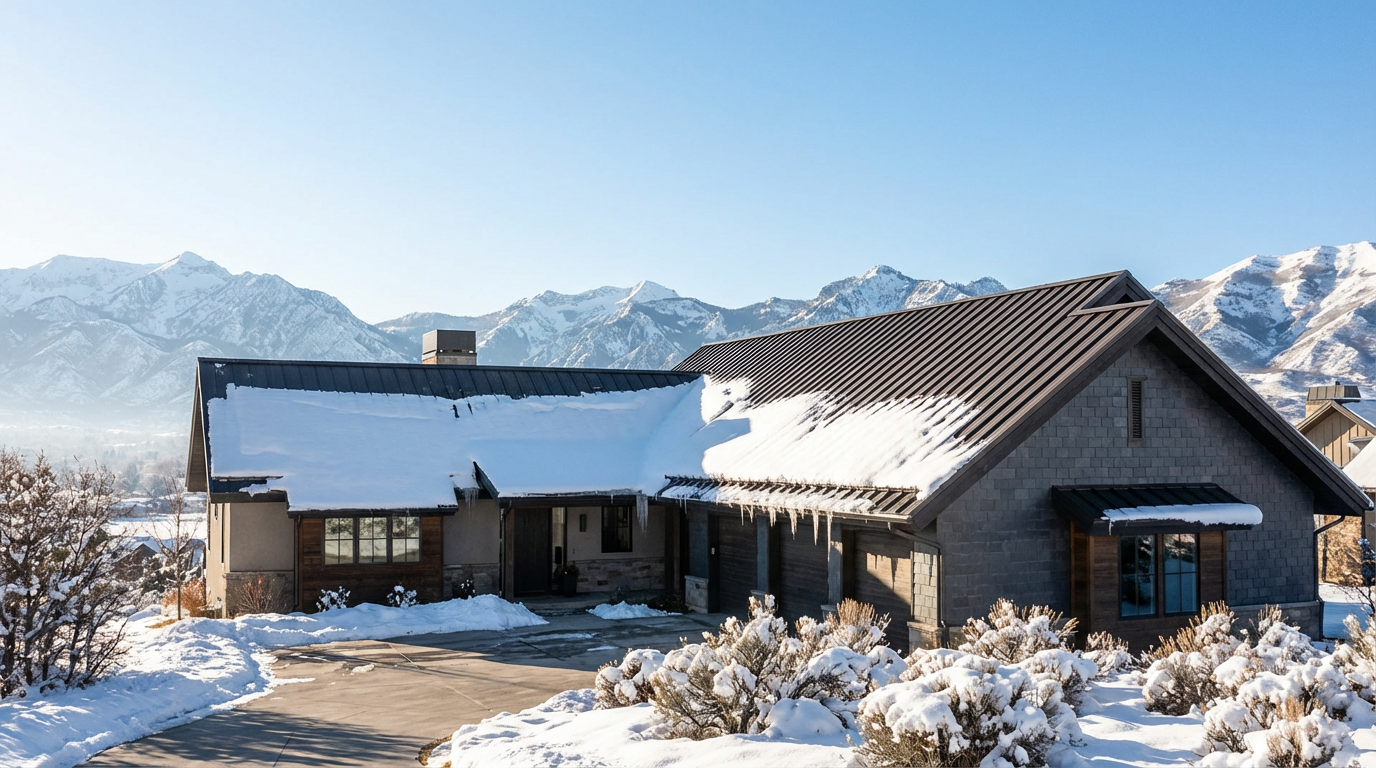
Utah's high elevation and intense summer UV push attic temperatures — and cooling bills — higher than most homeowners expect. Here's how cool roofing materials and proper ventilation work together to bring both back down.
If your upstairs bedrooms feel noticeably hotter than the rest of the house every July and August, your roof is probably part of the problem. Salt Lake City's elevation and clear, high-UV summers mean roofs absorb more solar radiation than in most parts of the country — and a roof that isn't built to handle that heat passes it straight down into your attic and living space. "Cool roofing" is the industry's answer to that problem, and it's worth understanding before your next replacement or repair.
What Is a Cool Roof, Exactly?
A cool roof is simply one designed to reflect more sunlight and absorb less heat than a standard roof, measured by two properties: solar reflectance (how much sunlight bounces off) and thermal emittance (how efficiently the roof releases the heat it does absorb). ENERGY STAR maintains the most widely recognized rating program for cool roofing products and publishes guidance on how reflectance and attic performance work together to cut cooling costs. The lighter the color and the more reflective the surface, generally, the cooler the roof stays — though modern reflective granule technology has made even darker-colored products far more efficient than they used to be.
Why It Matters More in Utah Than Most Places
- Elevation and UV Intensity: Salt Lake City sits high enough that UV exposure is meaningfully stronger than at sea level, which accelerates both heat absorption and material degradation on unprotected roofs.
- Clear, Dry Summers: Utah's low summer humidity means less cloud cover to diffuse solar radiation, so roofs take a more direct hit day after day from June through September.
- Temperature Swings: The same roof that needs to reflect intense summer sun also has to handle heavy winter snow loads — which is why material choice and proper ventilation both matter more here than in a milder climate.
Materials That Perform Well as Cool Roofs
- Standing Seam Metal: Naturally one of the most reflective common roofing materials, and it doesn't suffer the granule loss that gradually reduces asphalt's reflectivity over time. We source panels from suppliers like CMG Metals, which has a Salt Lake City facility and understands how metal performs in this specific climate. See our full comparison in metal roofing vs. asphalt shingles for Utah homes if you're weighing the switch.
- Reflective Asphalt Shingles: Manufacturers including GAF and CertainTeed offer shingle lines with reflective granule technology built to lower surface temperature without changing the traditional shingle look — a good option for homeowners who want cooling benefits without switching to metal.
- Lighter Color Choices: Within any material category, lighter shades reflect more solar radiation than dark ones. If cooling performance is a priority, it's worth weighing color alongside style when selecting your product.
Attic Ventilation: The Half of the Equation People Skip
A reflective roof surface only solves part of the heat problem. Even with a cool-rated material, a poorly ventilated attic trap heat that radiates down into living spaces and puts stress on your HVAC system. Proper intake and exhaust ventilation lets hot attic air escape continuously rather than building up over the course of a summer day — the same airflow that also prevents the moisture buildup behind winter ice dams. If you're not sure your attic is ventilated correctly, our Utah roof maintenance guide covers what to check each season.
Is Upgrading to a Cool Roof Worth It?
For most Salt Lake Valley homeowners, the case is strongest when a cool-rated material is chosen at the time of a planned replacement rather than as a standalone upgrade — the cost difference over a standard product is modest, while ripping off a healthy roof early to chase energy savings rarely pencils out. If your current roof is aging and you're already comparing options, our Pricing Calculator gives you an instant ballpark by material type, and our full cost breakdown explains what drives the final number.
The Lifespan Bonus
Cool roofing isn't just about lower summer energy bills — reflecting UV rather than absorbing it also slows the granule loss and material breakdown that shorten a roof's usable life in Utah's intense sun. That's one more reason reflectance is worth asking about during any material comparison; our guide to the best roofing materials for Utah's climate covers how each option holds up long-term.
Not sure whether your current roof and attic setup are working against you in the summer heat? Summit Roofing offers free roof inspections for homeowners across Salt Lake City, Murray, Draper, Sandy, South Jordan, and the surrounding Wasatch Front — we'll check your ventilation, assess your material's condition, and walk you through cool roofing options honestly, with no pressure toward a bigger job than you need.
Written by
Summit Roofing Team
Roofing Specialists · Summit Roofing LLC
Summit Roofing serves homeowners and businesses across Salt Lake City and the Wasatch Front with expert roofing installations, repairs, and inspections.
Ready to get started?
Get a Free Roofing Estimate
- No obligation, 100% free
- Same-day response
- Licensed & insured team