
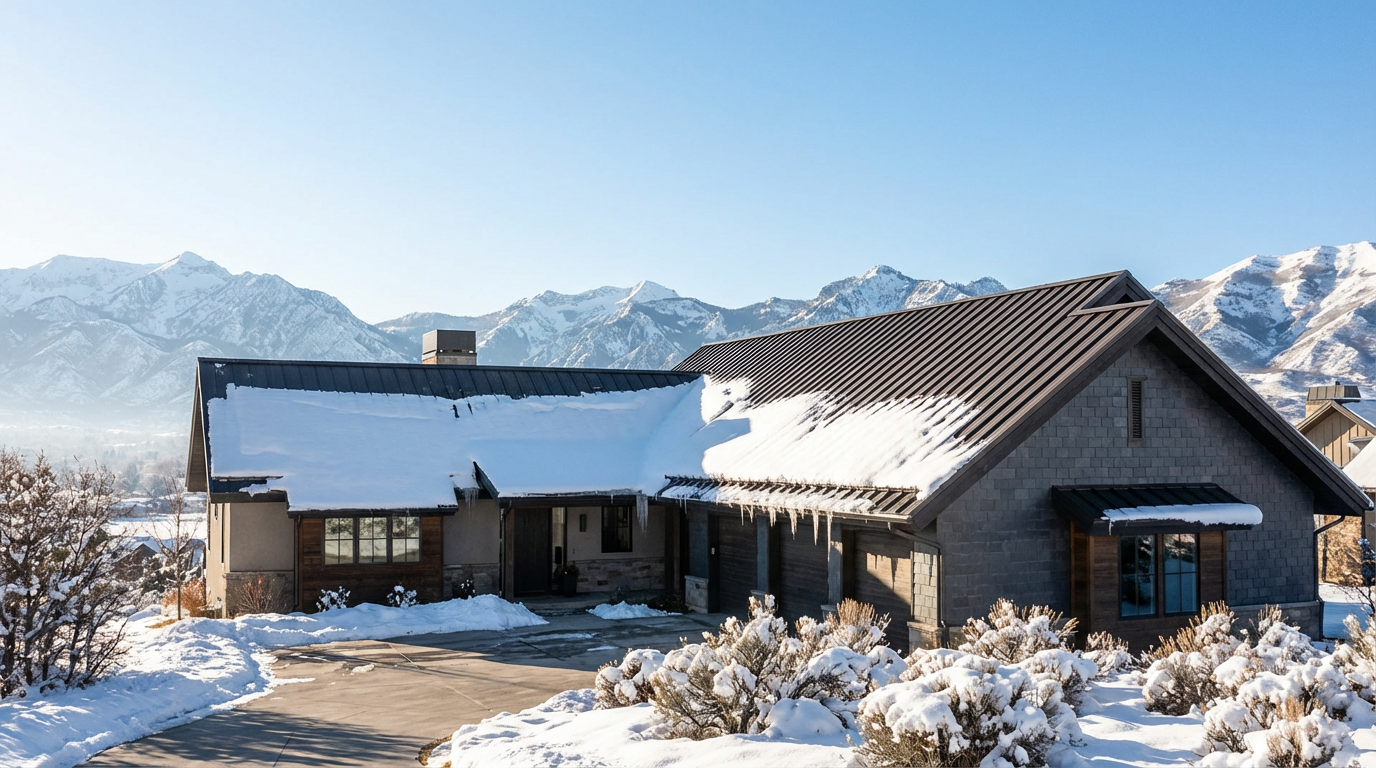
Class 4 shingles are built to survive hail that destroys standard asphalt — a real advantage along the Wasatch Front's hail corridor. Here's what the rating actually means and how to weigh the upfront cost.
"Are impact-resistant shingles actually worth the extra money, or is that just a sales pitch?" It's a fair question, and one we get constantly from homeowners in Sandy, Draper, and South Jordan — neighborhoods that sit squarely in Utah's hail corridor. Class 4 shingles are a real, independently tested upgrade, not a marketing label. Here's what the rating means, how it holds up against Utah storms specifically, and how to decide if it's the right call for your roof.
What "Class 4" Actually Means
Impact resistance for roofing shingles is graded on a four-tier scale, with Class 4 as the highest rating a shingle can earn. To reach it, a product has to withstand repeated impacts from steel balls dropped onto the shingle surface without cracking the mat underneath — a lab test meant to simulate the blunt force of large hail. It's an objective, pass/fail standard, not a subjective quality tier, which is why it's worth looking for specifically on the product label rather than taking a contractor's word that a shingle is "hail-resistant."
Why It Matters More Here Than in Most States
- Frequent Hailstorms: The Wasatch Front sees hail events regularly through spring and summer, and National Weather Service storm reports show the Salt Lake Valley sits in a recognized hail-prone corridor rather than an occasional-hit zone.
- Real Financial Exposure: Hail is consistently one of the costliest sources of insured property damage nationally according to the Insurance Information Institute, and a standard shingle roof damaged in one storm often means a full, unplanned replacement.
- Repeat Risk: Unlike a one-time event, homes in this corridor can see damaging hail more than once over the life of a roof — which changes the math on paying more upfront for a shingle built to take the hit.
How Class 4 Shingles Perform Against Utah Hail
A Class 4 shingle won't guarantee zero damage in every storm — extremely large hail can still cause cosmetic marks or, in severe cases, real damage to any roofing material. What the rating does deliver is a meaningfully tougher mat construction that resists the cracking and granule loss that lead to leaks after a moderate-to-large hail event. Manufacturers including GAF and CertainTeed offer Class 4 lines built on the same architectural shingle profiles homeowners already expect, so you're not sacrificing curb appeal for durability.
The Cost Difference
Class 4 shingles typically carry a modest premium over standard architectural shingles — noticeably less of a jump than moving to an entirely different material like standing seam metal. If you're comparing options, our Pricing Calculator gives you an instant ballpark by material type, and our full roof replacement cost guide breaks down everything else that factors into the final number.
The Insurance Angle
Many carriers offer a discount for homes roofed with Class 4 shingles, since the rating directly lowers the odds of a hail claim. Discount amounts and eligibility vary by insurer, so it's worth calling your agent and asking directly before you assume a specific number — but it's a real conversation worth having, not a myth. If your current roof has already taken hail damage, see our guide on filing a hail damage insurance claim in Salt Lake City for the right way to document it.
Class 4 vs. Other Material Choices
Standard architectural asphalt remains the right call for homeowners prioritizing upfront cost above all else, and standing seam metal is a strong option for those planning to stay in a home long-term who want to minimize both hail risk and maintenance over decades. Class 4 shingles sit in between — asphalt's familiar look and installation cost, with a real durability upgrade for hail specifically. Our full comparison of metal roofing vs. asphalt shingles and our broader guide to the best roofing materials for Utah's climate cover how every option stacks up beyond just hail performance.
Is It Worth It for Your Home?
The case is strongest for homes in higher-hail-frequency areas, homes currently uninsured or facing rising premiums, and any homeowner already planning a replacement who wants to avoid repeating the process after the next major storm. It's a harder sell for a roof that's otherwise healthy and not due for replacement anytime soon — Class 4 is a decision made at replacement time, not a reason to tear off a good roof early.
Not sure whether Class 4 makes sense for your specific roof and neighborhood? Summit Roofing offers free roof inspections for homeowners across Salt Lake City, Murray, Draper, Sandy, South Jordan, and the surrounding Wasatch Front — we'll walk you through material options honestly, including whether the upgrade pencils out for your situation, with no pressure toward the pricier system. Schedule yours through our free roof inspection page, or explore our roof replacement services to learn more.
Written by
Summit Roofing Team
Roofing Specialists · Summit Roofing LLC
Summit Roofing serves homeowners and businesses across Salt Lake City and the Wasatch Front with expert roofing installations, repairs, and inspections.
Ready to get started?
Get a Free Roofing Estimate
- No obligation, 100% free
- Same-day response
- Licensed & insured team