Utah's first real snowfall doesn't wait for a convenient weekend — a few hours of fall roof prep now is what keeps a clogged gutter or a loose shingle from becoming a January leak. Here's exactly what to check before winter sets in.
Every year, the first hard freeze along the Wasatch Front turns small, ignorable roof problems into real ones. A gutter that's been draining slowly all fall backs up and ices over. A loose flashing seal that's been fine all summer starts letting meltwater in. None of this requires a major repair to prevent — it requires doing a handful of specific checks before the snow actually arrives. Here's what that list should include.
Clean and Inspect Your Gutters First
Gutters do more work in a Utah winter than most homeowners realize — they're the first line of defense against the ice dams that form along the eaves once snow starts melting and refreezing. A gutter full of leaves and debris can't move water, and standing water in a gutter is exactly what freezes first.
- Clear Leaves and Debris: Do this after most of the leaves have dropped, not before — one pass too early just means doing it again in a few weeks.
- Check for Sagging or Separation: Gutters pulling away from the fascia won't drain properly and can be damaged further under the weight of snow and ice.
- Confirm Downspouts Drain Away from the Foundation: Water dumped right at the foundation is a problem for your basement, not just your roof.
Check Attic Ventilation Before the Snow Flies
This is the step homeowners skip most often, and it's arguably the most important one. Poor attic ventilation traps heat that escapes from living spaces below, which warms the underside of the roof deck just enough to melt snow on top — meltwater that then refreezes the moment it reaches the colder eaves. That cycle is exactly how ice dams form. ENERGY STAR covers how attic ventilation and insulation work together to manage this kind of heat transfer, and it applies just as much to winter ice dam prevention as it does to summer cooling costs. If you've had ice dams in past winters, a ventilation check — not just a gutter cleaning — is usually the real fix.
Inspect Flashing and Every Roof Penetration
Chimneys, vent pipes, and skylights are where most winter leaks actually start, because flashing seals can loosen or crack over a summer of UV exposure and temperature swings without ever showing an obvious sign from the ground. Each penetration should have intact, properly lapped flashing with no visible gaps or cracked sealant. This is also a good time to glance at valleys — anywhere two roof planes meet sees more water concentration than a flat section, and any debris buildup there traps moisture against the deck.
Clear Debris and Trim Back Overhanging Branches
Branches that hang over the roof drop leaves and needles into valleys and gutters all fall, and under heavy snow load they can break and cause real damage. Trim anything overhanging before the first snow, and do a final debris sweep of the roof surface and valleys once most leaves are down. This single step prevents a surprising share of the gutter clogs and valley backups we see every winter.
Look for What You Can See From the Ground
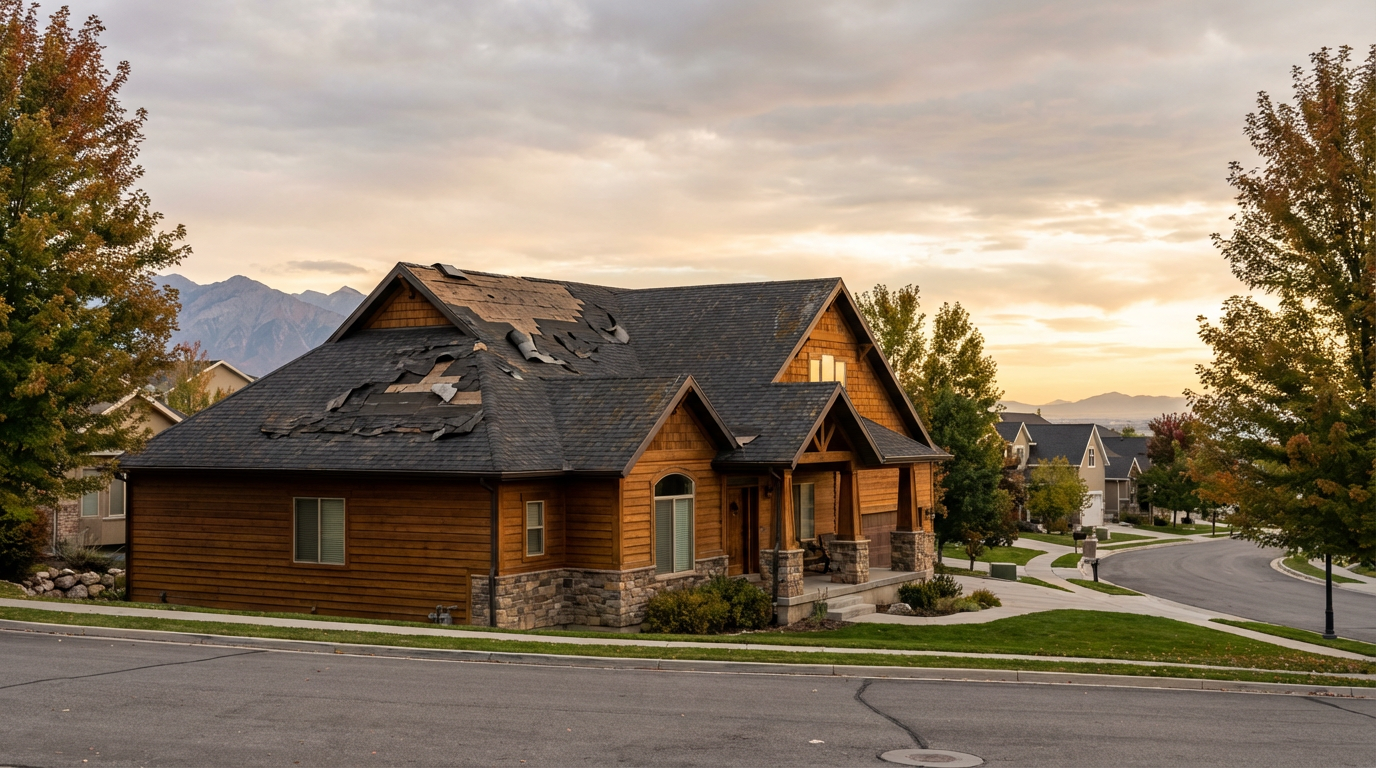
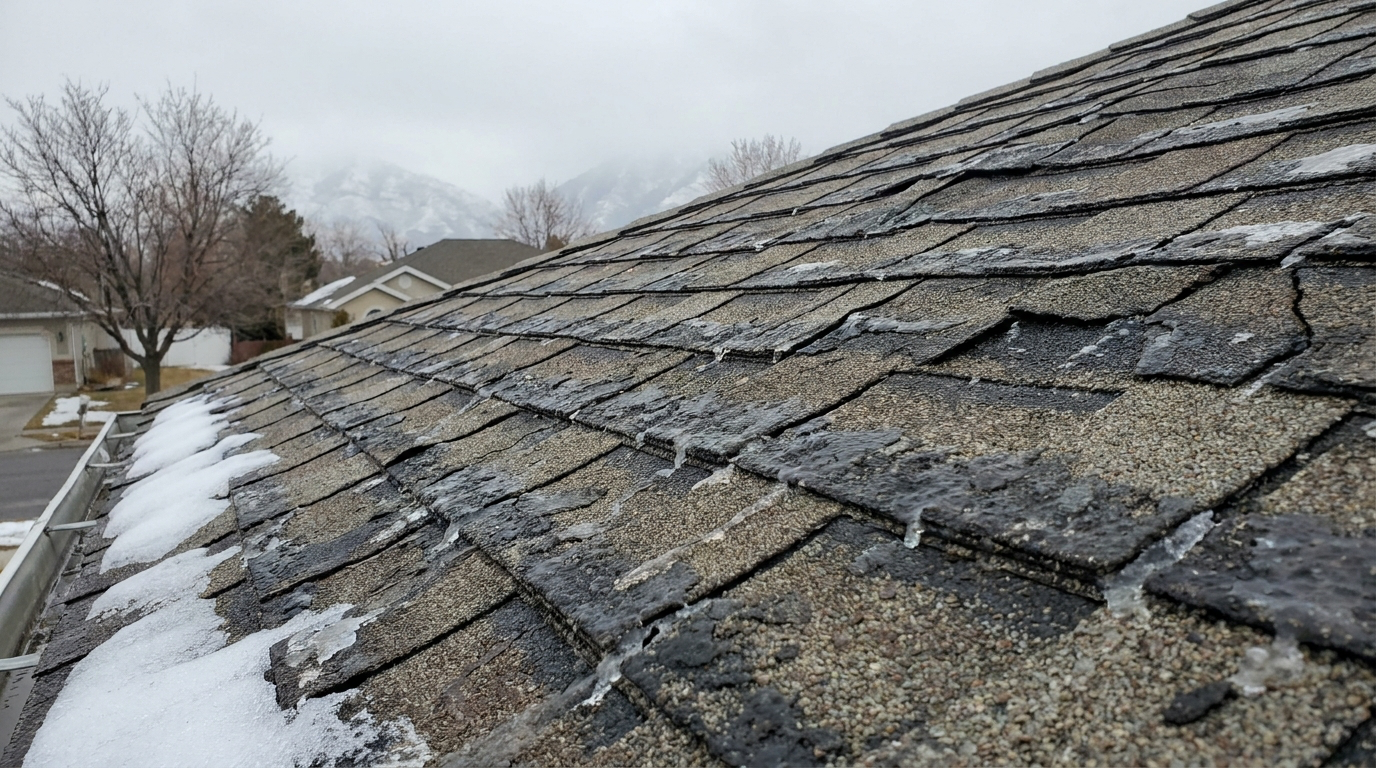
Before anyone needs to get on the roof, walk the perimeter of your home and look for the warning signs that are visible from down below: curling or missing shingles, dark granules collecting in the gutters, or sagging sections along the roofline. Our guide to 7 warning signs your Utah home needs a new roof covers what each of these actually means for a roof's remaining life — worth a read if you notice more than one.
Don't Skip the Professional Fall Inspection
A homeowner can catch a lot from the ground and the gutter line, but a trained eye catches what you can't see — cracked flashing sealant, early ventilation problems, or decking that's already taking on moisture. The National Roofing Contractors Association recommends at least one professional inspection a year, and fall is the ideal window: it catches anything summer UV did before winter adds its own stress on top. Our guide on what to expect during a professional roof inspection walks through exactly what gets checked and how long it takes.
A Quick Pre-Winter Checklist
Clean Gutters and Downspouts
Clear debris and confirm water drains away from the foundation.
Check Attic Ventilation
Poor airflow is the root cause behind most recurring ice dams.
Inspect Flashing and Penetrations
Chimneys, vents, and skylights are where winter leaks start.
Trim Overhanging Branches
Prevent debris buildup and limb damage under snow load.
Schedule a Professional Inspection
Catch what isn't visible from the ground before winter adds stress on top of it.
Doing this now, rather than after the first storm, is the difference between a routine fall afternoon and an emergency repair call in January. Summit Roofing offers free roof inspections for homeowners across Salt Lake City, Murray, Draper, Sandy, South Jordan, and the surrounding Wasatch Front — we'll check your gutters, ventilation, and flashing, and give you a straightforward answer on what, if anything, needs attention before winter. Schedule yours through our free roof inspection page, ask about gutter installation if yours need replacing rather than just cleaning, or contact us with any questions.
Written by
Summit Roofing Team
Roofing Specialists · Summit Roofing LLC
Summit Roofing serves homeowners and businesses across Salt Lake City and the Wasatch Front with expert roofing installations, repairs, and inspections.
Ready to get started?
Get a Free Roofing Estimate
- No obligation, 100% free
- Same-day response
- Licensed & insured team